Drains
How to Unclog a Drain (and When to Call a Pro)
April 8, 2026 · 5 min read
A slow or clogged drain is annoying — but before you reach for a bottle of chemical drain cleaner, try these safer methods first. They clear most everyday clogs without damaging your pipes, and they'll tell you whether the problem is something you can handle or a job for a pro.
Step 1: Try boiling water (kitchen sinks)
For a grease-related kitchen clog, slowly pour a kettle of very hot water down the drain in stages. This can soften and flush light grease buildup. (Skip this one if you have PVC pipes or a porcelain sink you're worried about.)
Step 2: Plunge it
A simple cup plunger clears more clogs than most people expect. Fill the basin with a few inches of water to seal the plunger, cover any overflow opening or the second sink drain with a wet rag, and plunge firmly a dozen times. Consistent pressure is what breaks the clog loose.
Step 3: Clean the trap or the stopper
- Bathroom sinks and tubs: most clogs are hair and soap scum caught on the pop-up stopper. Remove it, clear the gunk, and rinse.
- Kitchen sinks: place a bucket underneath and unscrew the P-trap (the U-shaped pipe). Clear it out, then reassemble. This catches a surprising number of clogs.
Step 4: Try a drain snake
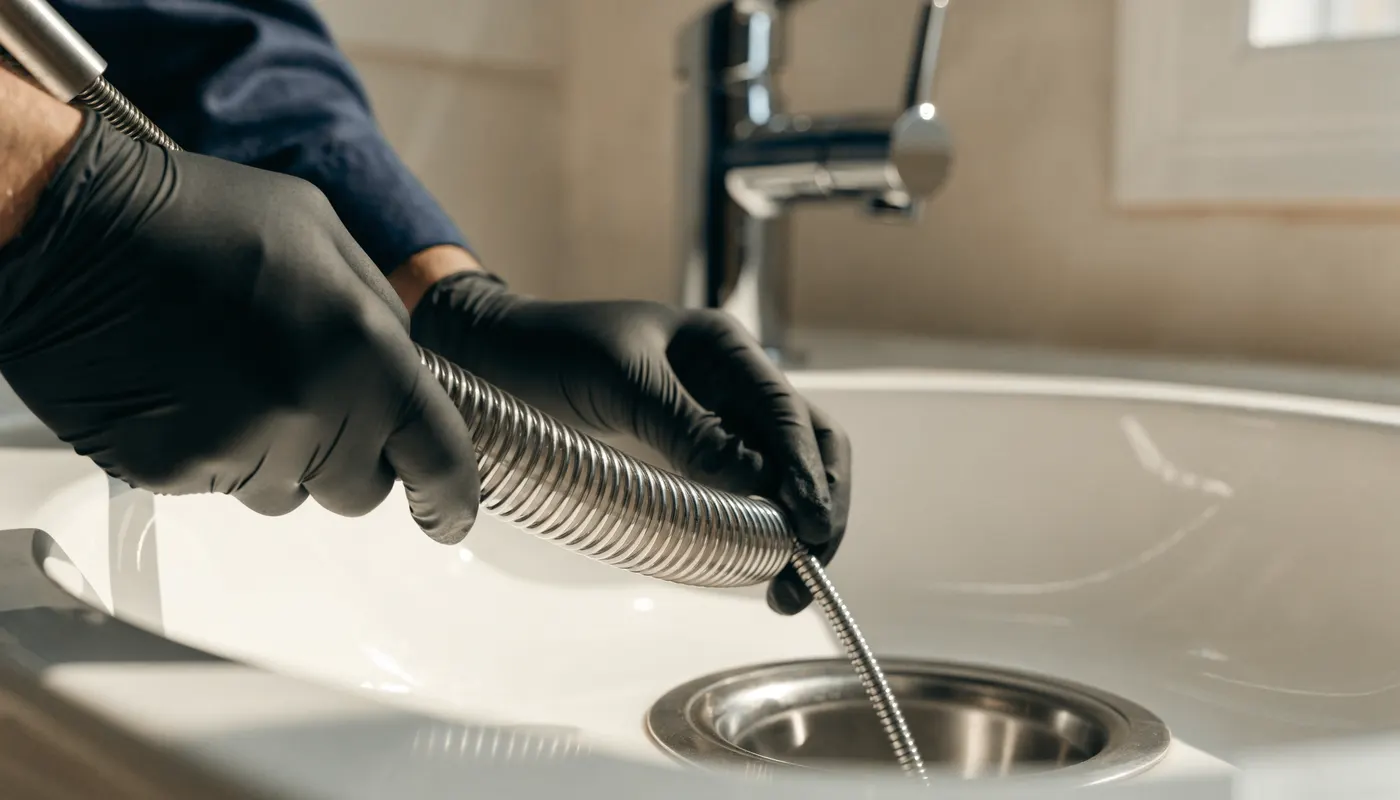
An inexpensive hand auger (drain snake) can reach clogs a plunger can't. Feed it into the drain until you hit the blockage, then crank to break it up or pull it out. Avoid metal coat hangers — they scratch pipes and rarely reach far enough.
When to call a professional
Some clogs are a sign of a bigger problem. Call a plumber if you notice any of these:
- Multiple fixtures backing up at once — this usually means the clog is in your main line, not a single drain.
- Gurgling toilets or drains, or bad sewage odors.
- A clog that keeps coming back in the same drain no matter what you try.
- Water backing up into a different fixture when you run the sink or flush.
In those cases, professional drain cleaning — with a proper auger or hydro jetting — clears the line completely and safely. If it points to the main line, a camera inspection can confirm the cause; that's part of our sewer line services. We serve homeowners across the West Valley, from Peoria to Buckeye.
How professionals clear tough clogs
When a clog is too far down or too stubborn for a hand tool, professionals use a powered drain auger to break it up and pull it out, or hydro jetting — a high-pressure water stream that scours the inside of the pipe back to full diameter. Hydro jetting is especially effective on grease and on root intrusion in main lines, and it cleans the pipe rather than just poking a hole through the blockage. For recurring or main-line clogs, we can also run a camera to see exactly what's happening before we clear it.
What not to do
- Don't keep pouring chemical drain cleaner — it can damage pipes and makes the eventual professional fix more hazardous.
- Don't use a metal coat hanger — it scratches pipes and rarely reaches the clog.
- Don't ignore a drain that keeps clogging — recurring clogs usually mean buildup or a partial blockage that only gets worse.
How to keep drains clear
- Keep grease, coffee grounds, and fibrous foods out of kitchen drains.
- Use a hair catcher in showers and tubs.
- Only flush toilet paper — nothing labeled "flushable" wipes included.
- Run hot water for a few seconds after using the kitchen sink.