Emergencies
Do I Have a Gas Leak? Warning Signs and What to Do
September 9, 2026 · 6 min read
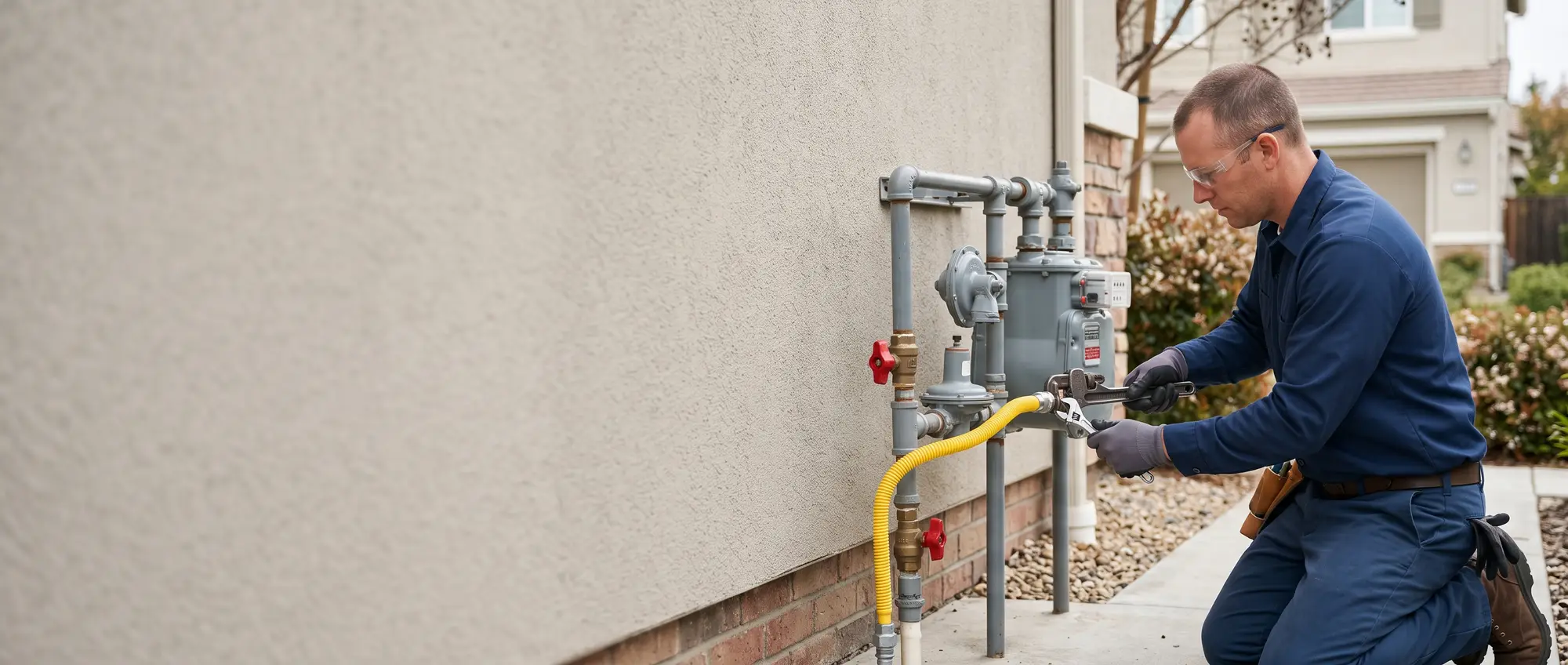
Most plumbing problems are about property damage and inconvenience. A gas leak is different — it's a genuine safety emergency. Natural gas is highly flammable, and a large enough leak can cause fires, explosions, or carbon monoxide exposure. The good news is that gas leaks almost always give you warning signs. Knowing them — and knowing exactly what to do — can keep your family safe.
The warning signs of a gas leak
1. The smell of rotten eggs
Natural gas is naturally odorless, so utilities add a chemical called mercaptan that smells like rotten eggs or sulfur. This is the most common and reliable sign of a leak. If you catch that smell — even faintly — take it seriously and investigate from a safe distance.
2. A hissing or whistling sound
Gas escaping from a line or fitting can make a faint hissing or whistling sound near an appliance, a wall, or the gas meter. If you hear it, don't go looking with a flashlight or lighter — leave and call for help.
3. Dead or dying vegetation
An underground gas line leak can kill grass, shrubs, or plants directly above it, even when the rest of the yard is healthy. A patch of dead vegetation with no obvious cause is worth investigating.
4. Physical symptoms
Exposure to a gas leak can cause headaches, dizziness, nausea, fatigue, or trouble breathing — often affecting everyone in the home at once, and easing when you step outside. If symptoms improve the moment you leave the house, that's a major red flag.
5. An unexplained spike in your gas bill
A slow leak you can't smell can still show up as a higher-than-normal gas bill. If your usage jumps with no change in habits, it's worth having your lines checked.
What to do if you suspect a gas leak
- 1Get everyone out — people and pets — and move well away from the house.
- 2Don't touch anything electrical. No light switches, garage door openers, phones, or appliances — a single spark can ignite gas. Don't start your car in an attached garage.
- 3Leave doors open as you go if you can do it quickly, but don't waste time — getting out is the priority.
- 4Call from a safe distance. From outside or a neighbor's, call your gas utility's emergency line and 911.
- 5Don't go back inside until emergency responders or a professional say it's safe.
What causes gas leaks?
Gas leaks usually start at a connection or fitting rather than in the middle of a solid pipe. Common causes include corroded or aging pipe, a loose connection at an appliance, damage from digging or renovation, and improperly installed lines. Older West Valley homes with original gas piping are especially worth inspecting — the same aging that affects water pipes and fixtures affects gas lines too.
When to call a licensed plumber
After the immediate emergency is handled by the utility, a licensed plumber locates and repairs the leak, tests the system for tightness, and gets your gas appliances safely back online. We also handle new gas line installation and relocation for ranges, water heaters, pool heaters, fire pits, and outdoor kitchens. Learn more about our gas line services, and if a gas water heater is involved, our water heater repair team can help too.
We serve homeowners across the West Valley — from Surprise and Sun City to Peoria and beyond. Gas work is never a DIY project; always use a licensed professional.