Water Treatment
Is Arizona Tap Water Safe to Drink? Filtration Options Explained
September 15, 2026 · 7 min read
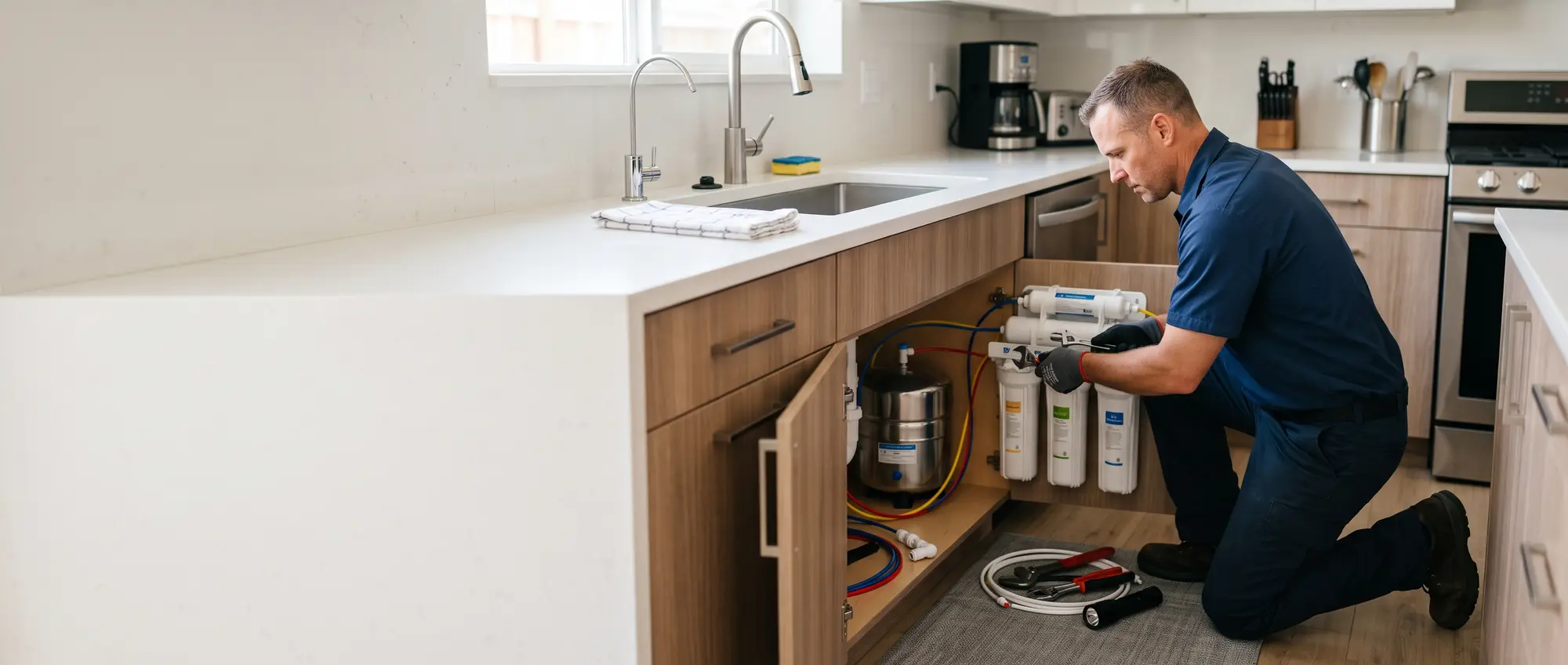
It's one of the most common questions West Valley homeowners ask: is our tap water actually safe to drink? The short answer is that municipal water in Arizona is treated and tested to meet federal and state safety standards. The longer answer — the one that explains the taste, the spots on your dishes, and the scale on your fixtures — comes down to what's left in the water after treatment. Here's what's really going on and what your options are.
Is it safe? Yes — with a caveat
Water delivered by municipal utilities in Arizona must meet EPA Safe Drinking Water Act standards, with regular testing for contaminants. In that legal sense, it's safe to drink. Your city publishes an annual water quality report (often called a Consumer Confidence Report) that shows exactly what's been tested. The caveat is that "safe" and "pleasant" aren't the same thing — and Arizona water has some quality-of-life issues that filtration can address.
What's actually in West Valley tap water
- Hardness minerals (calcium and magnesium). Arizona has some of the hardest water in the country. This is what causes scale on fixtures, spots on glassware, and wear on your plumbing and water heater.
- Chlorine or chloramine. Added to disinfect the water. Safe at treated levels, but it's the most common reason tap water has a noticeable taste or smell.
- Total dissolved solids (TDS). A mix of minerals and salts that affects taste and leaves residue.
- Trace contaminants. Kept within legal limits by treatment, but some homeowners prefer to reduce them further for drinking water.
Filtration options, from whole-house to the tap
Water softener
A softener isn't technically a filter — it removes the hardness minerals that cause scale and spotting. It protects your pipes, water heater, and fixtures and makes soap lather properly. If your main complaint is scale, spots, and dry skin, this is the fix. We cover the tradeoffs in is a water softener worth it in Arizona.
Whole-house filtration
A whole-house (point-of-entry) system treats all the water entering your home — commonly reducing chlorine, sediment, and taste/odor issues at every tap. It's often paired with a softener for the best of both: scale protection plus better-tasting water throughout the house.
Reverse osmosis (RO) for drinking water
For the highest-purity drinking water, an under-sink reverse osmosis system removes a very wide range of dissolved solids and contaminants. It's the go-to when you want bottled-water quality straight from the kitchen tap without the plastic waste. RO treats the water you drink and cook with rather than the whole house, which keeps it cost-effective.
Under-sink and faucet filters
Simpler carbon filters at a single faucet improve taste and reduce chlorine for drinking water. They're the lowest-cost option and a reasonable starting point, though they don't address hardness or treat the whole home.
Softener or filter — which do you need?
It comes down to the problem you're solving. If you're fighting scale, spotty dishes, and short water-heater life, start with a softener. If your concern is taste, smell, or drinking-water purity, look at filtration — whole-house for every tap, or RO for the kitchen. Many West Valley homes benefit from both, and they work well together. We'll help you decide based on your actual water, not a sales script.
We install and service water treatment systems across Surprise, Sun City West, Peoria, and the West Valley. Call us for an honest assessment of what your home needs.